What Teenage Nostalgia Can Teach Us
Picture this. You’re in 8th grade. You’ve just found out your crush likes your best friend. Brutal. As if that weren’t enough, you’ve also got braces… and bangs?! (Teenage you was a whole era!) That moment, the pit in your stomach, the embarrassment, the quiet heartbreak, was probably the first time you felt real romantic rejection. Along with it came the familiar emotional cocktail: feeling left out, suddenly hyperaware of your body, wondering what was wrong with you, and asking yourself if you’d ever be someone’s first choice.
For a lot of us, our relationship patterns start forming right there, in those teenage years. That’s when feelings got big and confusing and impossible to ignore. When attraction turned into attachment, and loss didn’t feel temporary, it often felt like the end of the world.
Our first love experiences usually show up before we have any emotional armor. We don’t yet know how to separate who we are from who we’re with. We don’t know that something can feel intense and meaningful without being forever. So when it ends, it doesn’t just hurt; it rattles us deeply and without any real context.
Even long after those relationships are over, they leave fingerprints. Not always as pain, but as instinct. They shape how we attach, how we interpret silence, how we react to closeness, and what we do when something important slips away. They teach us, quietly, what longing feels like and how we cope when our hearts don’t feel settled.
Looking back now at our teenage selves, there’s so much room for tenderness. We can see how young we were, how little information we had, and how deeply we felt anyway. Our teenage selves weren’t dramatic or foolish. We were learning in real time, doing the best we could with the tools we had. There’s wisdom there, too. In how innocently we loved, how honestly we hurt, and how badly we wanted to belong.
Those early heartbreaks are where our emotional language begins. And when we look back with grace instead of judgment, we get to honor what we went through and who we were becoming. By reflecting on that era with curiosity instead of judgment, we get to tap into our inner teen and learn from her and for her.

The Relationship Rules We Absorb Without Noticing
One of the hardest parts of teenage relationships is that we don’t enter them as blank slates. We show up carrying invisible rules about love, conflict, and closeness, rules we never chose but somehow learned anyway. Most of those rules come from home. We absorb them by watching the adults around us. How they handle tension. Whether feelings are talked through, avoided, minimized, or turned into something explosive. Long before we start dating, those patterns are already taking shape inside us, even if we have no language for them yet.
So when conflict shows up as a teenager, we don’t usually respond thoughtfully. We respond on instinct from what we’ve known. We pull away, shut down, over-explain, get quiet, get loud, or act like everything is fine. Not because we are immature or dramatic, but because our nervous systems are doing exactly what they were taught to do. We are trying to stay safe with the only tools we have.
It gets even more complicated because the person we are with is usually carrying a completely different set of rules. What feels normal or loving to one person can feel confusing or threatening to another. Suddenly, the issue is no longer just the disagreement itself, but two unspoken systems colliding without anyone realizing what is happening. (Not to mention, being 15 years old while going through all of this!)
As teenagers, there is very little room to step outside of these patterns. We are repeating dynamics we did not choose and often cannot yet see. Learning to recognize them, question them, and slowly rewrite them is adult work and something we can now reflect on and acknowledge. It’s so important to be gentle with our teenage selves for this reason.
When Love Felt Like the Answer to Everything
There was a time when love felt like the solution to all of it. Like if someone chose you and meant it, the rest would fall into place. So many of us entered teenage relationships ready to adjust ourselves accordingly. We learned to be easier, cooler, and more agreeable. To soften the parts that felt inconvenient and highlight the ones most likely to be liked.
What we did not always notice was how much of ourselves slipped away in the process. How quickly worth became tied to attention, approval, and public affection. How easy it was to lose track of what we actually liked or needed when someone else’s preferences felt more important.
We used to obsess over crushes in the most committed ways, straightening our hair every single day, waking up an extra hour early just to do it (BTW, how did we have that kind of energy?). We’d casually linger by a certain locker or take the long way to class just to cross paths.
There’s also something really sweet about that version of us, our teenage selves who weren’t afraid to care that much, to be that hopeful, and to be so openly excited about it all.
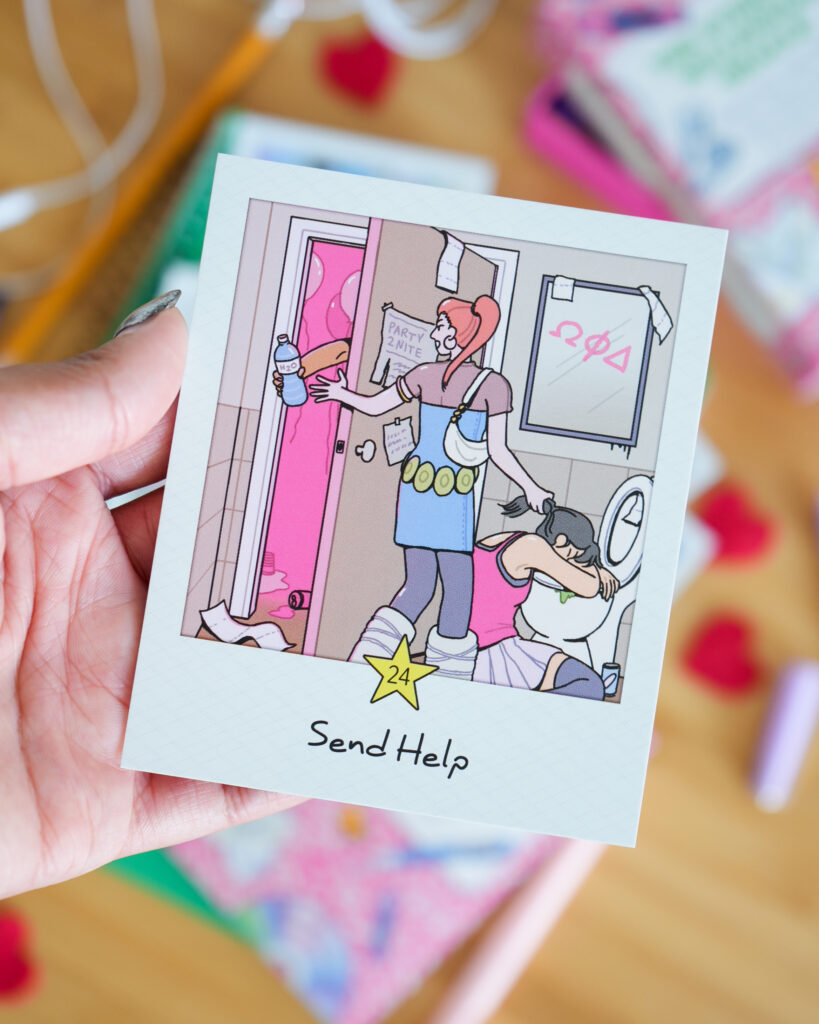
The Small Moments That Linger
It is not shocking that teenage relationships hurt (we’re so young and care SO much!). We probably all remember what that felt like, and can feel the sting a bit today, even. What we sometimes forget is how some of those moments stay with us, far beyond our teenage years. And it isn’t always the big break-ups; sometimes it’s the quiet wounds and experiences we went through that show up later on. Realizing you were the last to know. Giving more than you received. Learning too late that your needs were never part of the equation. Feeling embarrassed, overlooked, or easily replaced.
Those moments can stack up and show up later on in our interactions with people as adults. They can shape how safe we feel with people. They teach us expectations that we carry forward, sometimes unconsciously, sometimes unfairly.
Even as adults, we can find ourselves reacting to the present through fears learned years ago.
This is why I think it’s so important and helpful to spend time with our inner teen.
To reflect on all of the things she went through (the fun, the bad, the sad, and everything in between!). There are most likely some really painful early memories from our teenage years that we still need to work through. However, there’s also an attitude of fun, innocence, excitement, and joy that we can learn from her, too.
How Teenage Love Echoes Into Adulthood
Teenage relationships aren’t always a thing we grow out of. They are formative in ways that only become clear years later. They are where we first learn what closeness feels like, how conflict shows up, and what love can cost us. They are where we stumble over boundaries we did not yet understand, where we practice communication without the tools to do it well, where we feel heartbreak for the first time, and discover that it can hurt in ways we did not know existed.
The patterns we develop in those years do not disappear when we get older. They show up in how we communicate, how we argue, and how we ask for reassurance, or avoid asking for it entirely. They show up in whether we lean in when someone is important to us or pull away to protect ourselves. They show up in what feels safe, what triggers anxiety, and what makes us feel seen or unseen. None of this appears out of nowhere. All of it has a history, and that history is often written in moments we barely remember at the time.
What most of us needed to hear back then and what still helps to hear now is simple. Heartbreak feels catastrophic when it is a brand-new set of emotions. It feels like it might undo you entirely. But it will not. You will survive it. You will survive the next one, and the one after that, too. And you will take these experiences with you. You do not have to rush the healing, laugh it off, or pretend it did not matter.
When we look back, it is worth spending time with that younger version of ourselves, not just joking about the braces and the drama, but sitting with the parts of her that were happy, hopeful, confused, and hurting. She was learning the language of love and loss in real time, even when it felt overwhelming. And in her own messy, earnest way.
Every heartbreak, every awkward first date, every misstep lives inside your inner teen, waiting to be acknowledged. When you meet her with compassion instead of dismissal, you do not just remember who you were. You honor how you became who you are now.
Spending Time With Your Inner Teen
If reconnecting with your inner teen feels meaningful, you are not alone! That is why I created The Everyday Millennial Oracle! I wanted to create something that made space for reflection, healing, and gentle reconnection with the part of us who felt everything so intensely. Something that lets you sit with your younger self without judgment and see her with the compassion she deserved all along. As well as to feel all the nostalgia, of course!
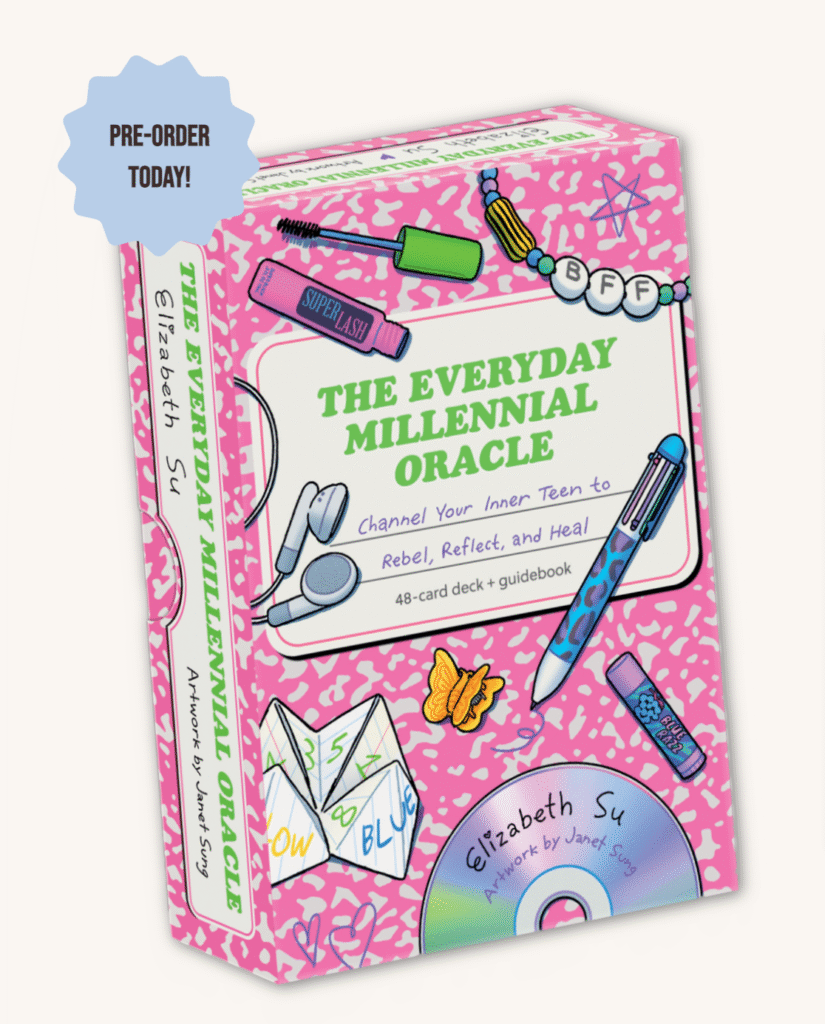
Think mix CDs, puka shells, and impulsive bangs, but grounded in psychology and self-understanding. This deck lives at the intersection of memory and meaning. It is for the version of you who spent hours perfecting playlists, refreshing messages, and believing everything was both devastating and full of possibility. That intensity was not something to outgrow. It was something to understand.

Creating this deck also helped me remember that healing does not always have to be heavy. Sometimes it looks like revisiting the past with curiosity, humor, and care. You can pre-order The Everyday Millennial Oracle and join in on honoring our inner teens, together!
PRE-ORDER THE DECK NOW!

