The Magic of Millennial Girlhood
I recently binge-watched Sterling Point and was completely obsessed with how beautifully the show understood girlhood and, more specifically, the importance and sacredness of platonic love between friends.
It touched on so many deep, tender, painfully relatable moments that I’ve found myself thinking about girlhood ever since: how formative it is, how fleeting it feels, and how much of ourselves is shaped by the girls we grow up alongside. I think many of us are also quietly grieving the way girlhood evolves as we grow older.
What was once hours spent cross-legged on a bedroom floor, trading secrets and passing folded notes in the hallway between third and fourth period, has become a sparse group text, a handful of hearted Instagram stories, and an occasional FaceTime. We are still connected, of course, but something about the closeness has changed. Teenage girlhood has a particular intimacy that adulthood rarely gives back to us in quite the same way.
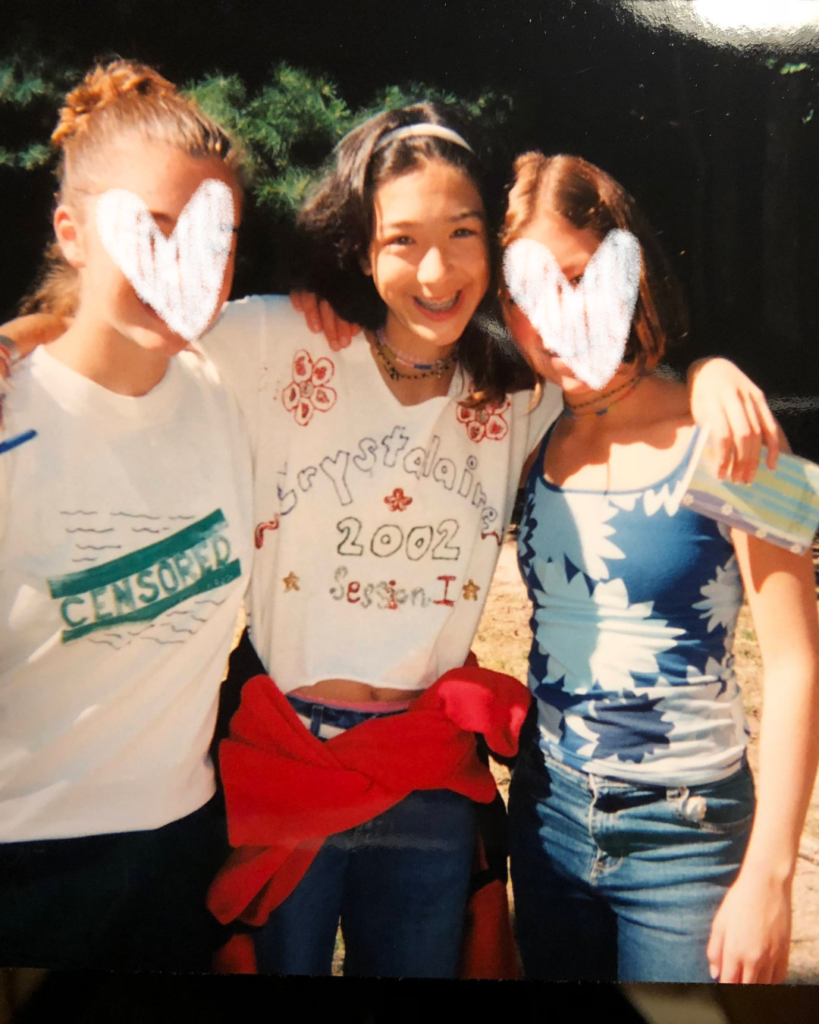
Female friends felt truly magical and pure during those teenage years. They were the first person we told when we had a crush on someone. They were the ones who slipped a tampon under the bathroom stall door when we got our period at school. They were the ones we got ready with before the homecoming football game, all of us squeezed in front of one bathroom mirror, covered in glitter and school colors, temporary mascot tattoos pressed onto our cheeks. Those friendships were never just friendships. They shaped us, strengthened us, and carried us through ever-changing versions of ourselves.

The Science Behind Why Those Friendships Mattered So Much
The reason girlhood is so integral to our lives is not just because of nostalgia. Puberty actually rewires our brains to become more sensitive to belonging, acceptance, and mattering to other people, right around the same time we’re developmentally able to understand other people’s perspectives on a deeper level. That combination is why peer relationships during adolescence take on a heavier weight and start to rival those of our families.
Where friendship in childhood was mostly about doing things together, riding bikes, playing the same game, adolescent friendship shifts into real intimate disclosure, trust, and support. That’s also the window when so much of our identity gets built. Researchers point to friendships becoming based on shared values and mutual respect, which helps us figure out who we actually are and who we want to become. The same research shows that healthy adolescent friendships can predict successful relationships and stronger mental wellbeing well into adulthood.
When Home Felt Complicated, Girlhood Was Stability
For a lot of us, girlhood also did something more important than we probably gave it credit for at the time. When things at home were unpredictable, friendship often became the one system that didn’t shift under our feet.
Part of family systems thinking looks at the home as its own emotional ecosystem, and when that ecosystem is unsteady, kids and teens instinctively look for a secure base somewhere else. For many of us, girlhood was that somewhere else. If your home life growing up wasn’t always steady or close, your best friend may have been doing more heavy lifting than either of you realized, functioning more like an anchor.
A study published in Frontiers in Psychology looked at what’s called the peer compensation hypothesis, the idea that when the bond with a parent feels insecure, forming a secure bond with a friend instead can act as a real protective buffer. Teens who had insecure attachment at home but a secure attachment with a friend showed fewer internalizing symptoms, things like anxiety and withdrawal, than teens who didn’t have a secure bond anywhere at all.
In other words, a rock solid friendship couldn’t undo everything happening at home, but it could genuinely soften the impact. So if your best friend was the one steady thing while everything else at home felt shaky, that was girlhood at its finest.

Friendship, Nostalgia, & Adult Life
We still crave the power of girlhood as adults because there is something deeply human about longing for that kind of unwavering connection.
However, in an increasingly digital world, that kind of closeness is much harder to maintain. We no longer see each other in the cafeteria every day or spend hours on the phone. Careers, relationships, families, responsibilities, and geography all compete for the same limited hours.
Now more than ever, I think we find ourselves longing for the nostalgia and magic of girlhood we experienced as teenagers. It represents a time when connection was built into the fabric of our everyday lives.
We didn’t have to schedule a debrief six weeks in advance. We didn’t have to coordinate across time zones or find a weekend that worked for everyone. We watched the same shows (when they aired in real time), obsessed over the same pop culture moments, tried new hobbies, and found ways to make ordinary days feel special.
And as the world continues to fill our feeds and our lives with heavy news, uncertainty, and negativity, I think we need that sense of girlhood more than ever. We need the kind of platonic love that reminds us we don’t have to carry everything alone. We may not be teenagers anymore, but we can still choose the parts of girlhood worth carrying. And the truth is, we absolutely still NEED to make room for silliness, creativity, vulnerability, and deep friendship.

A Shared Language Of Connection
Girlhood was never really a phase we aged out of, it was the first draft of a bond that keeps rewriting itself as we go. Psychologists have a concept for this called the convoy model of social relations, first developed by researchers Toni Antonucci and Robert Kahn in the 1980s. It’s the idea that our closest relationships travel with us through every major life transition, adapting to whatever support we need in that moment, rather than staying fixed the way they were when the friendship started.
There’s also something beautiful about simply moving through the same universal experiences as another woman that creates a connection nothing else can replicate. The first period, the first heartbreak, the pressure to look a certain way or take up a certain amount of space, becoming a mom, changing careers, and so on. You don’t have to explain any of it to another woman who’s lived it.
That shared language doesn’t stop at adolescence either, it just keeps evolving with us. That’s the real throughline from girlhood into womanhood. The specific, almost wordless understanding of another woman who has been where you are, and the comfort of knowing she’ll be there again for whatever comes next.

Ways We Can Reclaim Girlhood
Revisiting nostalgic activities, shows, and music
One of the best ways to channel the bond of girlhood is to travel back in time through the movies and music that defined that era for you. Put on the soundtrack that basically raised you, whether that’s a mix of Britney, Christina, and the Spice Girls, or a burned CD titled something like “Summer Jams” in Sharpie. Rewatch the shows that got you through countless sleepovers, the Lizzie McGuire marathons, the Mary-Kate and Ashley movie that you and your best friend had fully memorized.
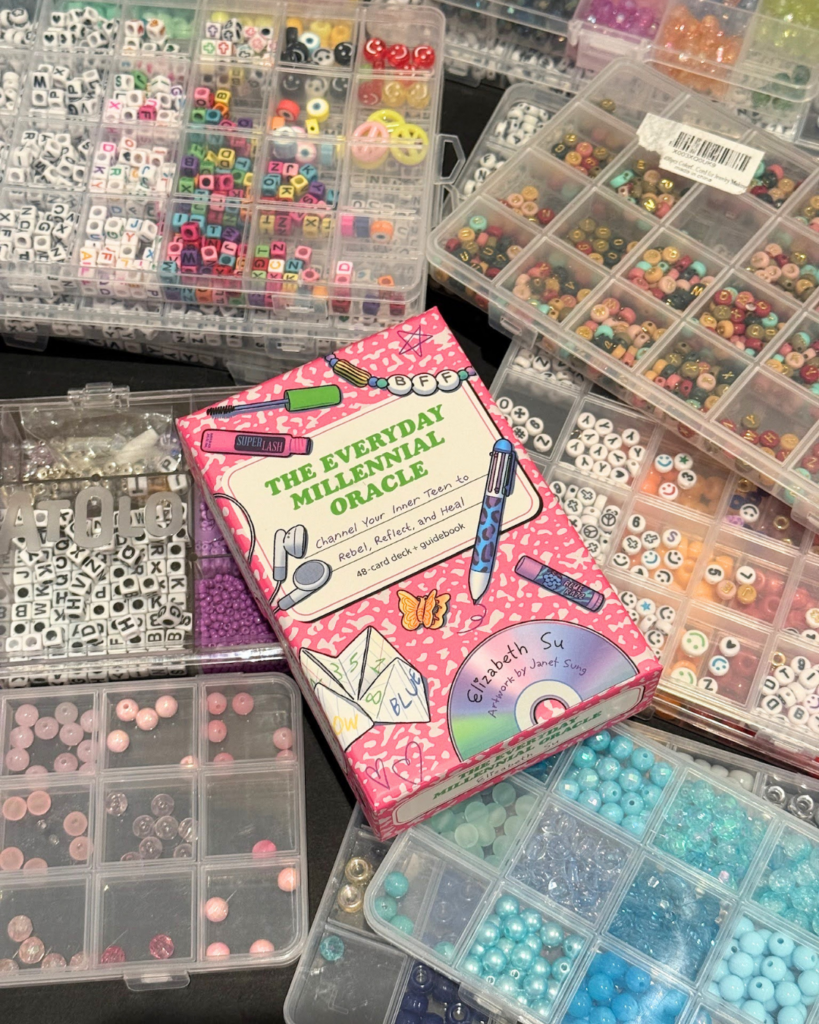
Other nostalgic activities help too, and honestly, that pull toward the past was one of the biggest motivators behind creating The Everyday Millennial Oracle Deck. I was inspired by the power of nostalgia and how effectively it can help us heal and reconnect with a more playful part of ourselves. It helps us relax in a way that feels almost involuntary, like muscle memory for joy.
Make room for play
Being willing to step outside our serious, scheduled, over-adulted lives for a moment and do something totally fun with little to no long-term purpose, especially alongside another person, can be its own kind of magic. Think Skip It in the driveway until the sun went down, or a Tamagotchi you were more emotionally invested in than some of your actual pets. Think prank calling from a Nokia brick phone, or a slumber party game of MASH that somehow felt as high stakes as an actual life decision. Recreating even a fraction of that energy as adults reminds us that we’re allowed to have fun, and not always be productive.
Set boundaries so you can actually show up
Setting boundaries can also help us maintain that sisterhood bond with the women closest to us. It might feel counterintuitive at first; boundaries and closeness rarely pair up in our heads, but boundaries let us show up as our best selves for each other. We have full lives now: careers, kids, partners, etc. The more we honor our own time, the more genuine energy we actually have to give the people who matter.
Revisit the past through a tarot reading
Tarot can become a playful, reflective way to have a conversation with our past selves. Pulling a card while thinking about a childhood friendship, an old heartbreak, a version of ourselves we’ve outgrown, or a moment that still lingers can help us slow down and ask questions we may not have known how to ask back then. What was our past self trying to tell us? What did she need? What did she believe about herself that we no longer believe? In revisiting the past, we can meet our younger selves with more compassion, and remember that she deserves to be understood, not judged.
Give yourself permission to reinvent
Giving ourselves permission to try new things and reinvent ourselves is its own kind of freedom. There was a version of girlhood, back when Von Dutch trucker hats and rhinestone belts felt completely reasonable, where you genuinely believed you could try anything, wear anything, or switch up your whole look overnight. Trying something new, even in a small way, whether that’s a hobby, a haircut, or finally learning to do the thing you always watched your friend do effortlessly, can make us feel more confident and make that inner teenage version of us genuinely happy.
Let Your Teen Girlhood Thrive
Girlhood isn’t just a phase of life we age out of; it’s an essential part of who we are.
We need it in our twenties, our thirties, our forties, and every decade after that. And while it’s undeniably harder to cultivate than it once was, it is completely worth the effort.
Girlhood isn’t something we have to leave behind. It’s something we can return to, revisit, and carry with us. Sometimes, all it takes is a little nostalgia to remind us of the parts of ourselves we never really outgrew.

So dust off your butterfly clips, grab your gel pens, and reconnect with the girl you once were and the woman she helped you become. Check out this 48-card deck and guidebook, filled with throwback charm, heartfelt advice, and little reminders to laugh more, feel deeply, create freely, and make space for the things that simply make you happy. Girlhood is here to stay!


