The Science of Whimsy: Why We’re All Craving a Little More Magic
If your social media feed has suddenly filled up with colorful crafts, iced coffee in a wine glass, heart-shaped pancakes, or any oddly specific little hobbies or trends, you’re not imagining it.
Etsy’s Spring/Summer 2026 trend report named “World of Whimsy” one of its major trends of the year. Searches for polka dots are up 835% year over year. Whimsical jewelry searches have increased by 84%. Needlepoint kits are up 175%, and searches for whimsical decor have climbed more than 50%. 🤯 Being “whimsical” is everywhere!
The reality is that there is a lot more to whimsy than just social media trends. There is an actual science behind why being whimsical helps us and how embracing playfulness can positively affect our mental health. Whimsy asks us to put our guard down and step away from the idea that productivity is the measure of our worth or success. It invites us to embrace play, curiosity, and the simple joy of doing something just because it makes us happy.
For many people, the growing interest in whimsy is a reflection of something they’ve been missing: wonder, creativity, and moments that feel light in a world that often feels very heavy. The last few years have brought a constant stream of stress for a lot of us. From nonstop news cycles and economic uncertainty to the pressure of optimizing every aspect of our lives, many of us have spent so much time focusing on getting through the day that we’ve forgotten what it feels like to simply enjoy it.
That may be why whimsy has become such a powerful movement, especially online. What started as an aesthetic- bows, colorful clothing, playful decor, nostalgic hobbies- has become something deeper. People are reaching for whimsy because it offers a small but meaningful way to bring more hope, comfort, and fun into our everyday lives. It’s a gentle rebellion against the pressure to always be productive, practical, or serious, and a reminder that joy is something we’re allowed to make space for.
It says, “What if everything doesn’t have to be efficient?“ What if something can just be fun?“
It makes sense that so many of us are drawn to things that feel nostalgic, colorful, and a little unnecessary right now. A bow on a sweater doesn’t solve the world’s problems. A silly mug doesn’t change your circumstances. But those tiny choices can remind us that there’s still room to find small moments of joy every day.
Many of us are using whimsy as a form of everyday escapism, not escaping reality entirely, but creating small moments that make our reality better.
In a world that often feels overwhelming, choosing delight can feel surprisingly powerful.
Why We Need Whimsy More Than We Think
It’s easy to dismiss whimsy as something cute but unnecessary, or just a fun trend. However, our brains and research tell a different story of why it’s so important.
When we’re under prolonged stress, our nervous systems naturally shift into survival mode. We become focused on getting through the day, solving problems, staying alert, and managing whatever comes next. Those skills are useful, but they leave less room for curiosity, creativity, and play. The part of us that gets excited about a new hobby or spends an hour making something just because we can often gets pushed aside.


Whimsy is one way we invite that part of ourselves back. Small sensory experiences, familiar rituals, creative hobbies, and playful routines can send signals of comfort and safety to the nervous system. A tarot pull before bed, a favorite playlist while cooking, a colorful notebook that makes you smile: these moments may seem insignificant, but they help create a sense of grounding. They remind your brain that life is not only about managing problems or checking things off a to-do list.
Research on play supports this idea. Studies have found that play continues to benefit adults by improving emotional regulation, strengthening relationships, and supporting psychological well-being. Play is not something we outgrow; it is something that continues to help us adapt, connect, and recover throughout life.
People who’ve intentionally built more whimsy into their lives describe a real shift in their anxiety and a better overall sense of self. Play builds emotional intelligence, strengthens resilience, and generates more positive emotions, and those effects tend to compound over time rather than fade.
Whimsy won’t fix the hard things or make real struggles disappear. Life is still life-ing. But it creates breathing room inside of hard seasons, small, reliable pockets of relief that add up over weeks and months and years. Over time, that’s the difference between white-knuckling your way through a hard stretch and having little moments built into your day that remind your body it’s allowed to slow down.
Whimsy creates tiny moments where your brain gets to step out of constant problem-solving mode and experience something else: curiosity, pleasure, and presence.
Play Isn’t Just for Kids
Whimsy isn’t just charming; it can also be deeply restorative. Therapists have long recognized that play and creativity help adults process emotions, work through difficult experiences, and reconnect with parts of themselves that everyday responsibilities often push aside. Adult play doesn’t mean pretending to be a child again. It simply means making space for curiosity, imagination, and creative expression through things like art, music, writing, movement, or hands-on hobbies.
When we make room for play and creativity, we’re doing more than filling our time. We’re giving ourselves a chance to reconnect with what feels meaningful, express parts of ourselves that don’t always have words, and notice moments of joy we might otherwise overlook.
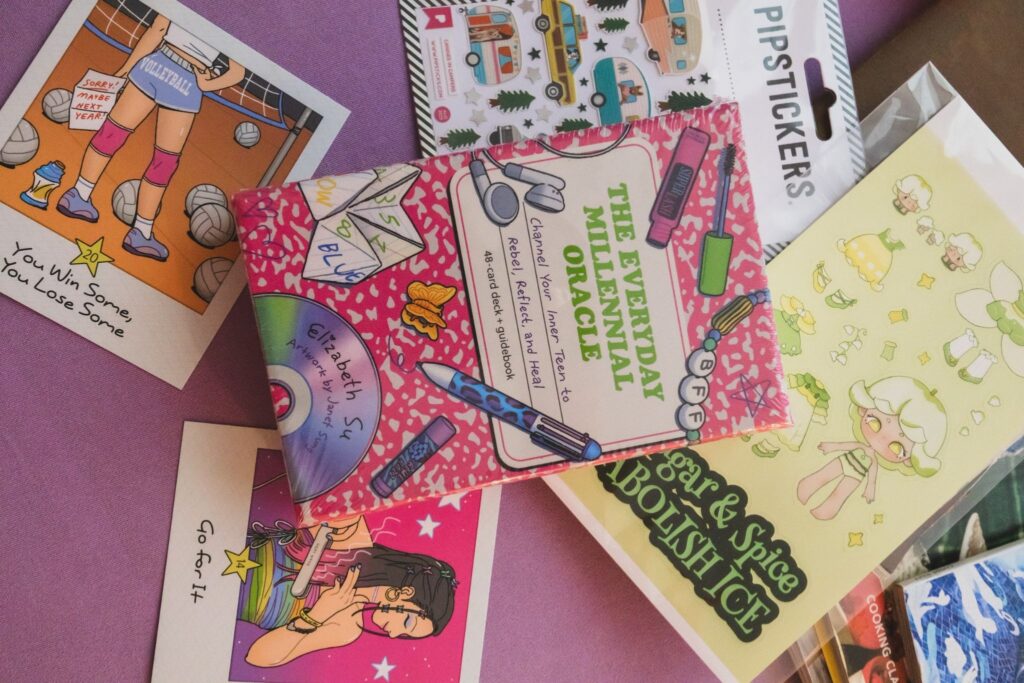
This is one reason hobbies can feel surprisingly healing. Painting something badly, learning an instrument, reading a card deck, gardening, crafting, baking, or trying a new activity can create a sense of freedom that we rarely experience in our day-to-day routines.
When life has been stressful for a long time, many people become disconnected from their own preferences. They know what they should do, what they need to accomplish, and what others expect of them, but they may no longer know what genuinely brings them joy. Whimsy creates an opportunity to ask a simple but surprisingly powerful question: what do I like? Asking yourself that question and other reflections can further your self-discovery and ultimately your inner healing as well.
Whimsy Isn’t Something You Buy
With all the attention whimsy has received online, it’s important to remember that embracing it doesn’t have to mean creating a shopping list. It’s easy to assume that the only way to bring whimsy into your life is by buying the latest trending items, but whimsy is about much more than what we surround ourselves with. At its core, it’s a way of experiencing everyday life. This mindset allows us to notice beauty, find joy, and create moments of playfulness rather than simply decorating our surroundings.
Being whimsical can be entirely free. Whimsy, at its core, is a form of self-care. If a trinket helps you access that feeling, that’s great! But the feeling and mindset are what actually help you, and you can be just as whimsical in an empty room as you can be surrounded by things.
Reconnecting With Your Inner Child
Whimsy also doubles as self-discovery. Trying a hobby you’re bad at or wearing a color you’d normally avoid are small experiments in figuring out who you are underneath the roles you’ve been playing for everyone else. That’s the same instinct behind reconnecting with your inner child: being amazed, inventing things, celebrating the smallest stuff without needing a reason.
A lot of us grew up believing our worth was tied to how responsible or put-together we could appear, and the part of us that used to get thrilled over a good sticker got quieted along the way. Whimsy and that feeling of nostalgia invite her back, not as regression, but as healing.
Choosing Delight Is Not a Small Thing
We live in a culture that often treats rest, play, and joy as things we have to earn after we’ve finished everything else. We’re taught to be constantly improving, leaving little room for things that exist simply because they make us happy. Whimsy pushes back against that mindset. It reminds us that joy does not need to have a purpose, and that something can be valuable simply because it brings us delight.
Choosing something just because you love it, without needing to justify it, make it useful, or explain why it matters, is an act of self-compassion. It’s a way of reconnecting with your own preferences and allowing yourself to want things for no other reason than that they make you smile.
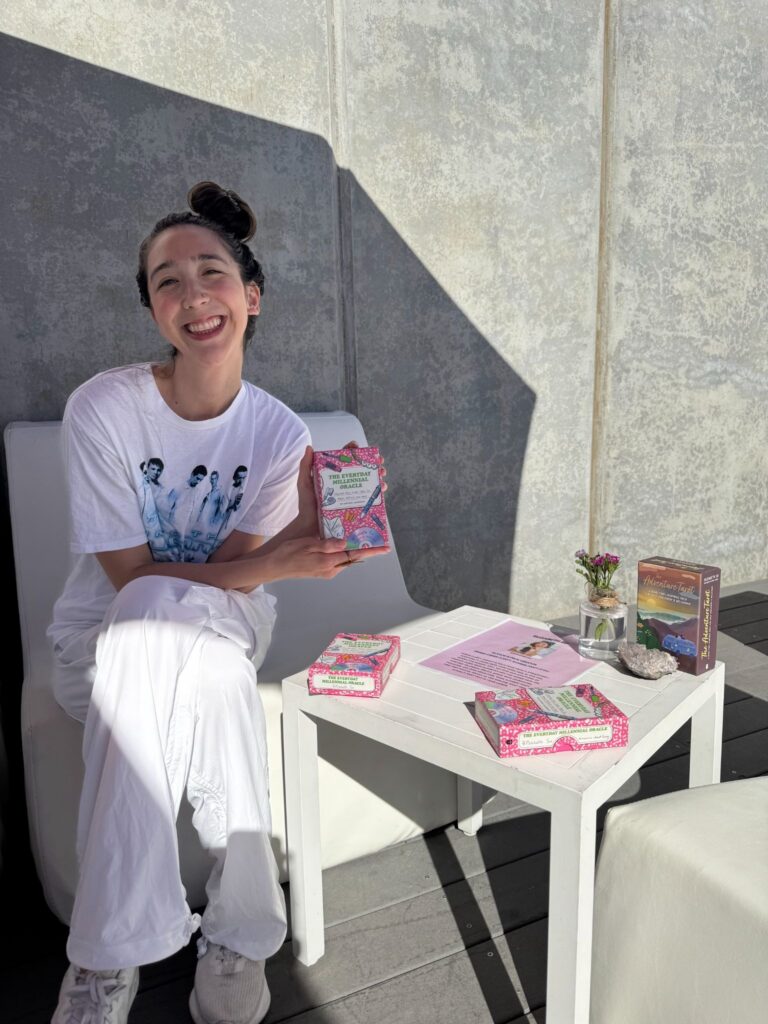
If you’re loving this era of nostalgia and whimsy as much as I am, I think you’re going to absolutely love the Everyday Millennial Oracle Deck. I created it as a way to embrace all the things that bring us back to ourselves: the nostalgia, the playfulness, the little moments of magic we often forget to make time for as adults. It’s a fun, Y2K-themed, meaningful tool to help you reconnect with your inner world, explore self-discovery, and create space for healing along the way. Shop the deck now!


