Setting Boundaries at Work: How Your No Makes Room for Your Yes
Right now, you might really be feeling the impact of your job. This time of year, the projects and tasks piling up can start to take a real toll. Maybe work has taken over more of your life than you’d like, or you’re not being treated the way you want to in the workplace. Regardless, you deserve to regroup, check in with yourself, and possibly look at setting boundaries at work.
According to Gallup, nearly 3 in 10 millennials report being “very often” or “always burned out at work,” and about 7 in 10 millennials experience at least some burnout. It is such a common experience in large part because many of us have grown up with constant messaging that we need to always be “on” for work, no matter what kind of day we’re having or what’s going on in our personal lives. We’re never taught how to say no or how to set proper boundaries.
We’ve been told time and time again that it’s risky to assert yourself at work, and this is especially true for women and women of color. If you’re a woman of color in a predominantly white workplace, saying no carries a different kind of weight. I know that anxious feeling well, of being completely unsure how to speak up (not even in a dramatic way, but even just to go to the bathroom!), and I made myself small because of it. The racial bias that exists in so many workplaces makes it feel impossible to feel like we can set limits. It’s so hard to live in that fear; even if you set small boundaries, it can feel like your job is on the line. That anxiety is real and completely valid, and for that reason, some of us may never be able to speak up the way we’d like to at work. Hopefully, we can start by honoring ourselves in small ways and build up to setting more meaningful boundaries that we need in order to protect our mental health.

Work will often make you feel like you always have to say yes. So learning how to say no and understanding the value of your “no” is incredibly important. It’s okay to say you can’t work overtime. To say “no” to the happy hour that you’d rather not go to. Or to (politely) decline the extra project you don’t have the bandwidth for. As adrienne maree brown perfectly said, “Your no makes the way for your yes. Boundaries create the container within which your yes is authentic. Being able to say no makes yes a choice.”
When you have more room for your yes, you can show up more in the ways that matter most to you, and your energy goes farther. Saying yes to everything can make you resentful and frustrated. The more honest and genuine you are to yourself and others about what you really want to do and have the capacity for, the better you’ll feel.
When you’re grinding to prove yourself over and over again, it takes a toll on your mental and physical health. In other words, not setting boundaries can send you straight into burnout, and it can be debilitating.
The hard thing about burnout is that it often begins with small compromises that seem harmless at the time. Individually, these moments don’t feel significant. But over time, they create a pattern of constantly giving more than they can replenish. The result isn’t just feeling tired after a busy week; it’s the chronic exhaustion, disengagement, and overwhelm that define burnout. That’s why burnout prevention often comes down to paying attention to the small things. The habits, expectations, and boundaries that seem insignificant today can have a major impact on your well-being months from now.
Practicing Saying No
The first step to setting boundaries at work is learning the power of saying no. That sounds simple, but for many women, and especially women of color, it can feel like anything but that. We’ve been taught that our value comes from how much we can handle: to always say yes, to work harder, to prove ourselves, to be helpful, accommodating, and grateful for every opportunity that comes our way. But constantly showing up for everyone else usually means abandoning ourselves in the process.
The truth is, boundaries aren’t barriers to success; they’re what make sustainable success possible. Saying no when your plate is full creates space for creativity, deeper focus, and the kind of work you’re actually proud of. It gives your yes more meaning because it’s intentional, not automatic.
I’ve been there. I’ve said yes to every project, stepped into roles that weren’t mine to carry, and convinced myself that pushing through exhaustion was just part of being dedicated. It worked…until it didn’t. Until I was totally burned out, feeling disconnected from work that I loved, and just generally grumpy and irritable.
Your “no” is not selfish. It doesn’t mean you lack ambition. It means you’re being honest about what you can realistically give without sacrificing your well-being. You’re allowed to have limits. You’re allowed to protect your time and energy.
Boundaries Aren’t Aggressive
A lot of us avoid setting boundaries because we’ve already played out the worst-case scenario in our heads and envision boundaries as an aggressive, argumentative approach. We imagine awkward conversations, hurt feelings, disappointing people, or being seen as difficult. We tell ourselves that saying no will damage relationships or create conflict. But it doesn’t have to look like that at all.
It can look like saying, “I want to give this the attention it deserves. Can we talk about what I should reprioritize to make room for it?”
It can look like, “I can’t take that on this week, but here’s what I can help with.”
It can look like walking into a difficult conversation already knowing where you stand, instead of trying to figure out your own needs while also managing everyone else’s reactions in real time.
Boundaries don’t require you to be cold, confrontational, or armed with the perfect script. They simply ask you to be clear about your time, your priorities, and what you can realistically give.
Many of us never had healthy boundaries modeled for us. Instead, we were taught to be agreeable, accommodating, and to prioritize keeping others comfortable over being honest about our own needs. You’re allowed to communicate your needs without apologizing for them, and you’re allowed to take up space without shrinking yourself to make others comfortable. You may ruffle feathers, disappoint people, or encounter resistance, especially from those who are used to a version of you that always said yes. But someone else’s discomfort with your boundaries is not proof that you’ve done anything wrong; it’s simply a sign that what you need and what others need are at odds.
Take Breaks
It’s easy to get through a workday without really stopping for a break. Your inbox is overflowing, you’re on back-to-back calls, a quick bite at your desk, and suddenly the day is gone.
One of the best ways to practice setting boundaries with yourself and at work is by taking breaks. It’s incredibly helpful to step away for a moment and give yourself a real pause. If you’re having a hard time taking breaks throughout the day, try intentionally scheduling them in and putting them as blocks on your calendar. If someone reaches out to you and needs something while you’re on your break, kindly let them know you’ll get to it when you return. It’s such a small way to honor ourselves, but one of the most powerful ways we can put our well-being first.
Work will naturally expand to fill your time if you let it, which is why breaks don’t usually happen on their own; they have to be protected. Your mind and body both work better when they get even a short reset during the day. Even 15–20 minutes is enough! Step outside, eat somewhere other than your desk, call someone you like talking to, or just sit quietly for a bit. It doesn’t have to be complicated to be helpful. Remember, taking a break isn’t falling behind, it’s part of doing your best work.
If you want a fun way to break up your work day, or to restart your mind amidst the chaos, check out my decks – The Adventure Tarot and The Everyday Millennial Oracle. Both of these are great, quick ways to reconnect with yourself (away from a screen) and add a sprinkle of fun to your day!

Closing the Workday
It’s 5 pm, and you’ve reached the end of your workday hours. Setting a consistent time to clock off is really about creating a healthy boundary. It helps your brain recognize when work is done for the day and when it’s time to shift into everything else in your life. Over time, that separation supports your energy, your focus, and your ability to actually show up well the next day.
If it ever feels hard to step away while things are still open, a simple reset can help: jot down where you left off and what your first step will be tomorrow. It’s a small way of giving your mind permission to pause without feeling like you’re forgetting something. The work will still be there tomorrow. You don’t have to carry it into you beyond that point.
A lot of workplaces are very good at making you feel like everything is urgent, everything is high-stakes, and that your value is tied to how much you produce. Most of us grew up being told that working overtime is a badge of honor and that the promotions and value at a company came from always doing more, even outside of our expected job descriptions and time. While there’s nothing wrong with working hard and valuing a high level of effort, it’s important to remind yourself that you don’t have to overachieve to be a good person or an employee. Sometimes the simplest work boundary to honor is logging off at the end of the day and giving yourself time to unwind, connect, and take care of yourself.

Embracing Play Outside of Work
When work becomes the center of your life, it’s easy to start treating every email, meeting, setback, or piece of feedback as if it reflects your entire worth. But when you make time for things outside of work, whether that’s hobbies, creativity, play, or simply activities you enjoy, you create a fuller sense of identity. Having parts of your life that exist beyond your job helps put work into perspective and reminds you that there’s more to you than what you do for a living.
Research also shows that regular moments of respite (like hobbies) are more effective at preventing burnout than longer but less frequent breaks (like a summer vacation). Studies have found that playful people are less stressed. By engaging in play, you learn to let go of perfectionism and become more resilient when things go “wrong”. Play is even a form of emotional regulation!
What you decide to do for play doesn’t have to be anything major. A dinner with a friend during the week. A workout class you enjoy. A show you save for the weekend. A nostalgic playlist. A hobby that has nothing to do with your job, just something that’s yours. These small things matter more than they seem; they give your days shape outside of work and help you come back to it with more balance. You’re not just your job. You’re a full person with a life that deserves attention, too. And building a life you enjoy outside of work is often what makes it easier to step away when the day is done.
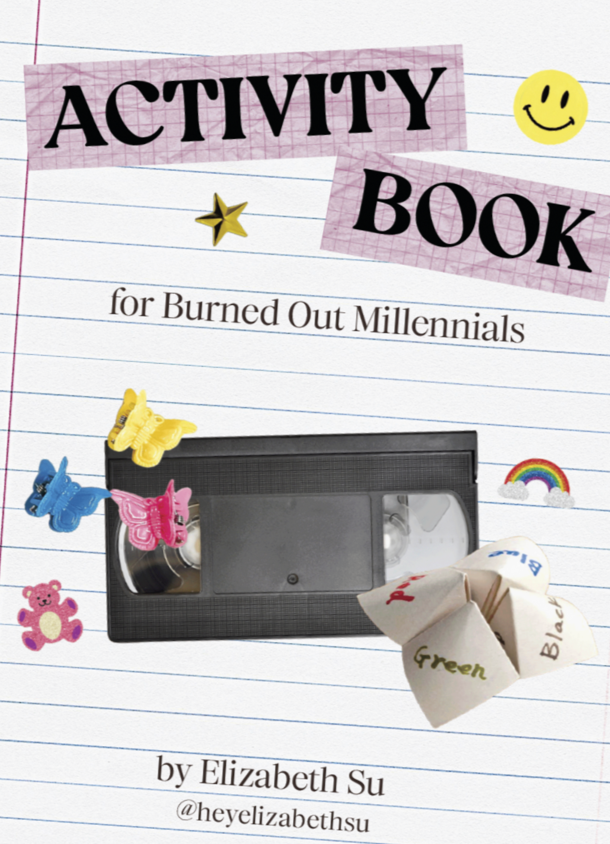
If you want a fun way to unwind, check out this activity book! (I’ll send it over to you when you sign up for the newsletter!)
The Importance of Saying No
Every “no” to overextending yourself is really a “yes” to your health, your time, and the parts of your life that matter just as much as your job. Protecting those limits is what allows you to stay well, stay present, and actually sustain the work you’re doing over the long term.
Setting boundaries can sometimes come with extra layers, making you feel like you have to prove yourself, be “on” all the time, or work twice as hard to be taken seriously. Saying no protects you, and it’s you choosing to take up space without burning yourself out in the process.
Keep choosing yourself, even in small ways.


