Health Trends in the 2010s That Were Actually the Worst
The 2010s were filled with hyper-specific wellness trends and content that quickly took over our feeds and everyday lives.
Victoria’s Secret fashion shows aired every year like clockwork. Tumblr was filling up with “thigh gap” photos.
A wellness industry that seemed to pop up overnight was convincing us that our bodies were problems waiting to be solved.
Looking back, some of it feels absolutely absurd, and honestly, we should let ourselves laugh at the detox teas, the 100-calorie snack packs, and the juice cleanses with celebrity endorsements.
The body ideal of the 2010s was this very specific, contradictory combination of things that genuinely couldn’t exist. Skinny, but curvy. Lean, but toned. Small waist, bigger hips. Effortless, but clearly worked on. An impossible standard for anybody to meet.
While some of these trends are quite funny to look back on, they also had a very real and long-term impact on how many of us view our bodies. Those messages reached us during a formative stage of young adulthood, when we were incredibly vulnerable to how our bodies were perceived.
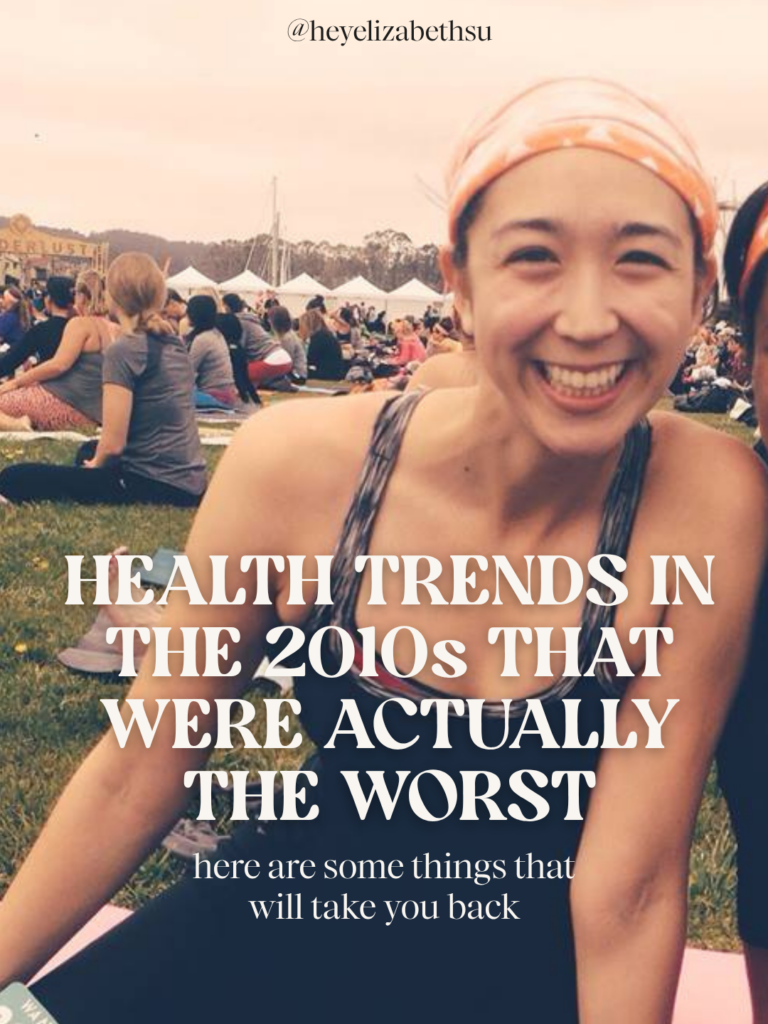
How it started, for me
My teen years were when I first became hypervigilant about my body. I was picking up signals everywhere: what was considered “good” food and “bad” food, what a desirable body type looked like, and how the media talked about and criticized female bodies.
Being a very thin teenager meant I fit the trend, which also meant there was enormous pressure to stay that way. To remain somehow pre-pubescent even as I got older, even as my body naturally changed the way bodies do.
When I got to college, I was terrified of gaining the “freshman 15″. So many people told me I would, like it was inevitable, and so I became determined to do the opposite. I set out to lose weight. And I was successful in doing this. But it came at a huge cost, as I started to battle years of disordered and restrictive eating.
College was really hard for me, and the dining hall was a living nightmare of meal comparisons, food judging, and way too much commentary about what I was eating. I remember reading an article at the time about Jennifer Aniston and how she eats the same salad every single day. I started doing that, too, because I wanted to look just like her.
I even took a nutrition class in college, genuinely believing I was doing something healthy for myself. But all I heard when I learned about the food pyramid was that carbs were bad, peanut butter was too fatty, dairy was unnecessary, red meat would give you heart problems, and sugar was evil. So I cut things out, one by one. And then one by one again.
Until I was pretty much only eating apples, egg whites, and carrot sticks.
At the time, it felt like discipline, which is really heartbreaking to look at now. Disordered (or restricted) eating was so normalized, and that, on top of your run-of-the-mill anxiety and societal pressures to be thin, made for a super toxic environment inside my head.
2010s wellness trends
Let’s talk about the actual trends of this era for a second. A lot of it was restriction, guilt, and constant pressure packaged as self-care. Insecurity wasn’t a side effect of what was being sold; it was the foundation of it. Entire brands were built around the idea that your body was a problem and, conveniently, they had the answer.
By this point, I was barely out of my college years, and my body dysmorphia had become deeply ingrained. The wellness trends of the 2010s didn’t introduce new insecurities for me; they layered themselves onto messages I had already spent years absorbing and continued to amplify them.
While wellness culture in the 2010s looked different from the decade before, much of the messaging beneath it was the same. The language simply shifted from “diet” to “wellness.”
Paleo. Keto. Whole30. “Clean” eating. Each one arrived with the promise of transformation. A healthier, better, more disciplined version of yourself. But beneath it all, the message stayed the same: your body was always something to improve, optimize, or fix. The project was never supposed to end.
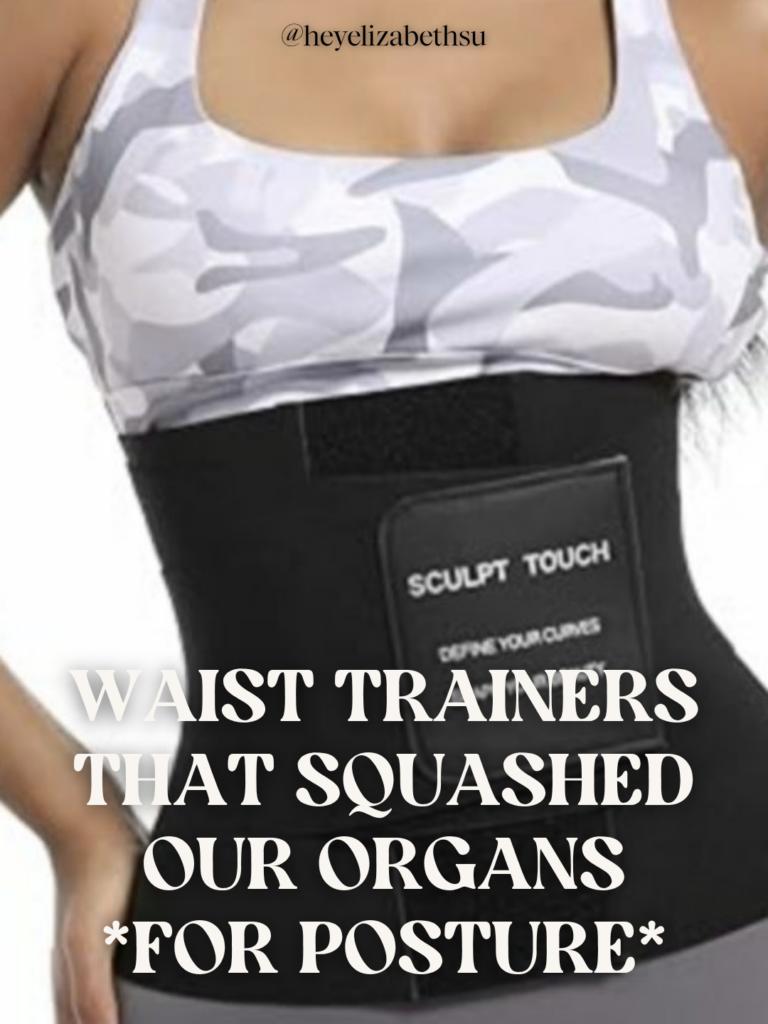
Waist trainers.
We were out here cinching ourselves into what were essentially corsets, calling it wellness, and wanting it to help make us thin. The premise was that if you compressed your organs for enough hours a day, you’d permanently reshape your torso. Celebrities were posting selfies in them, and we were totally buying them.
Coconut Water.
Coconut water had its moment as the miracle hydration drink, and if you drank it, you’d remember that it tasted…not that good.But you drank it anyway because it was supposed to be good for you, because the packaging was very convincing, and because someone influential was holding one up on Instagram.

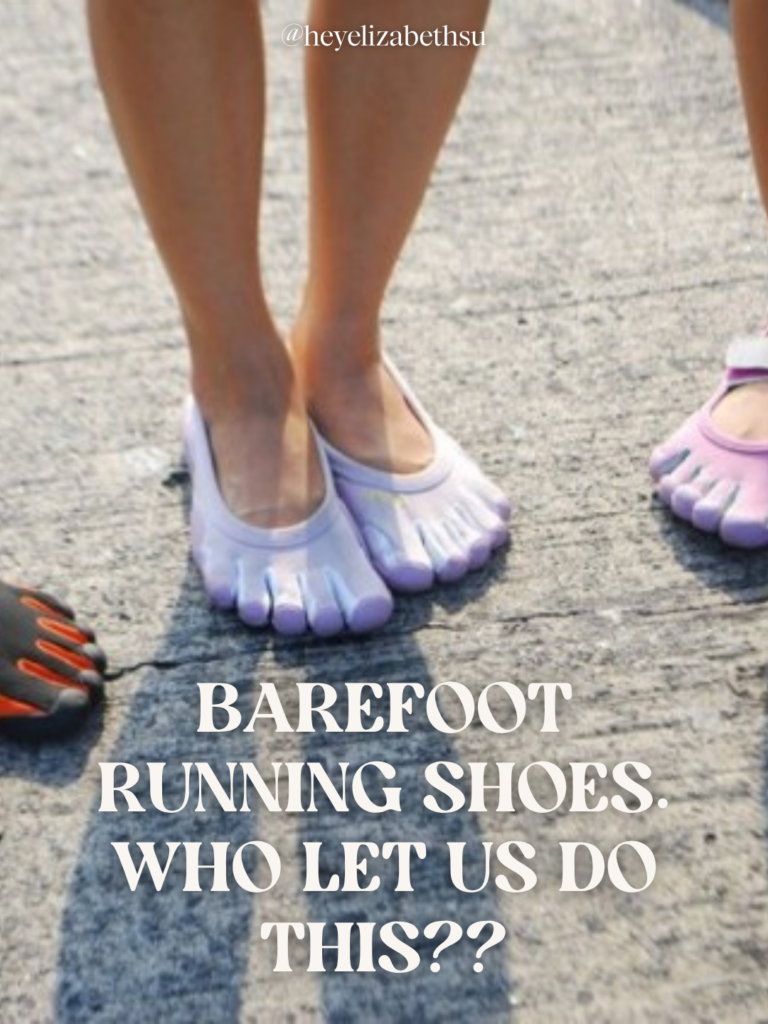
Barefoot running shoes.
The five-toed, foot-glove situation that was supposed to revolutionize how we move by making us look like we had hooves.
Hot yoga.
The concept of regular yoga apparently wasn’t enough, so someone decided the missing ingredient was a heated room at 105 degrees. You’d show up, immediately regret everything, spend 90 minutes wondering if this was actually dangerous, and then leave feeling faint.

Spin Classes.
SoulCycle and its imitators didn’t just sell a workout; they sold a community. Dimly lit rooms, an instructor who felt more like a hype preacher than a fitness coach, and the very strong implication that the people in that room were elite.

The aesthetic of certain bodies was everywhere. You absorbed it just by being online. Progress photos, body transformations, posed mirror selfies, every scroll became a comparison opportunity.
Body image became something we were actively, constantly engaging with, whether we wanted to or not. And even if you weren’t seeking it out, it found its way to you anyway.
What finding freedom actually looked like
Recovery, for me, didn’t look like a single turning point. It looked like a slow accumulation of smaller decisions. Eventually I stopped spending time with people who counted calories, or talked badly about what they were eating. That included my mom, which is its own really complicated thing to sit with.
I ditched trackers of all kinds. I don’t own a scale. I didn’t even look at my weight at a single doctor’s visit during my pregnancy, and that felt, genuinely, like an act of self-protection.
Anything restrictive is a slippery slope for me now. Paleo, elimination diets, “clean eating” frameworks, etc. I’ve learned I need to keep my distance from it all, because it’s just too familiar. The logic of restriction has a way of taking hold fast once you’ve lived inside it. It knows all the back doors.
I think about healing my relationship with food as finding a kind of freedom. Because I get so much time and energy back by not obsessing over what I eat or how much I weigh. That mental real estate is enormous, and for years I didn’t even realize how much of it I was spending. Every meal was a decision loaded with meaning. Every social situation with food involved was something to strategize around. That takes up so much of you.
The lens I’m still looking through
Those feelings and my struggles with body dysmorphia still crop up, though. My mind still sometimes makes up stories about what it means to look a certain way. That kind of rumination is probably something I’ll always have to manage to some degree, but thankfully it’s a lot quieter now.
Looking back, there’s a version of me who was absorbing all of that during some really important years, building a lens through which I still sometimes see myself. A lens where bodies are always being evaluated, always measured against some invisible standard that keeps shifting just out of reach. It’s incredibly difficult to acknowledge how these types of messages and trends can impact us, but it’s important to recognize how ingrained they are in us.
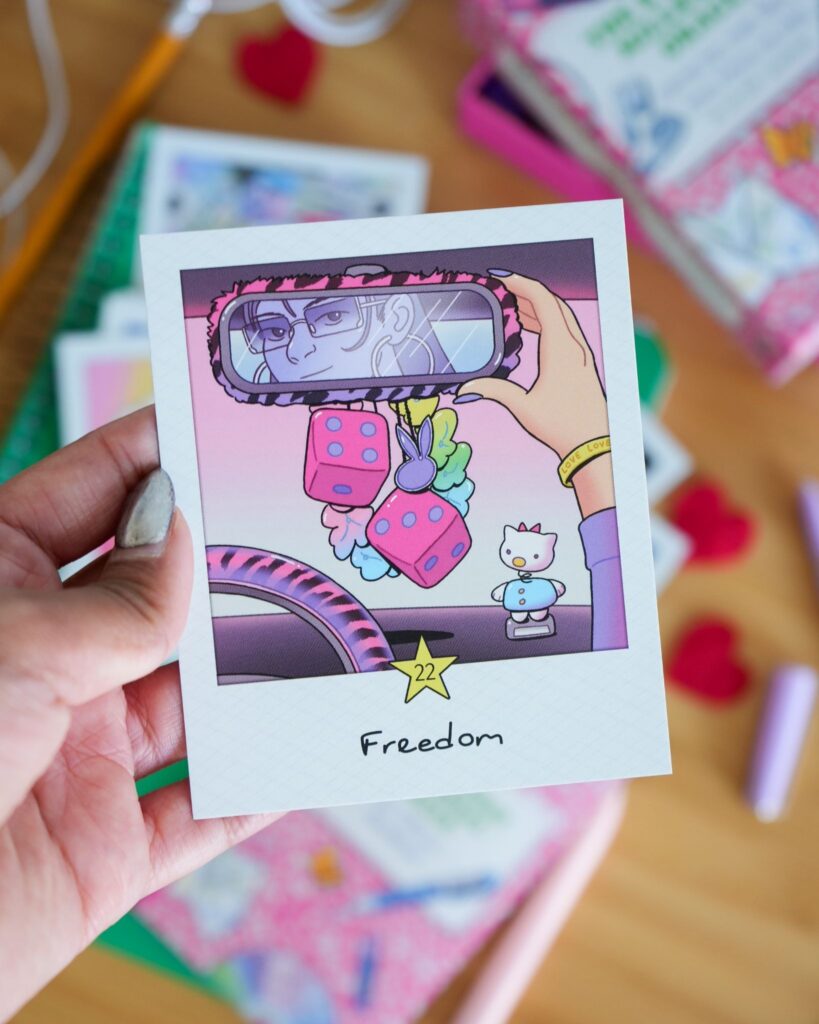
If this article resonated with you and you’re craving a deeper dive into nostalgia and all things Y2K, explore my deck, Everyday Millennial Oracle, where playful throwbacks meet meaningful healing. Each card invites you to feel deeply, embrace the vibes, and recharge your spirit with a little millennial magic.
Click here to order!


